
3D Polymer Clay Stencil & Silkscreen Generator
Turn vector patterns, filigree lace, botanical line art, and calligraphy into flexible 0.6mm printable stencils — with automatic shortest-gap island bridging and easy peel lift tabs.
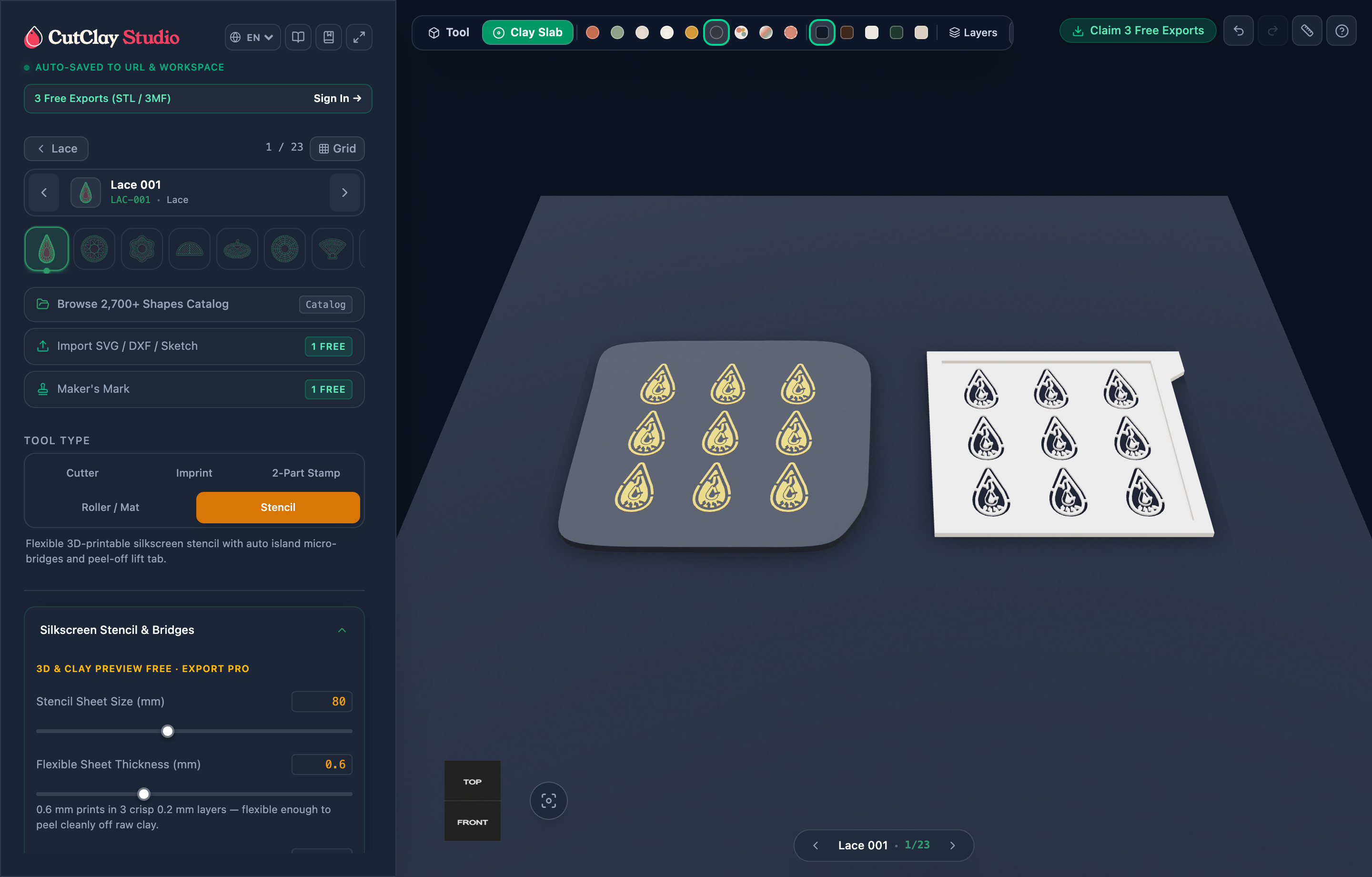
Printable flexible stencils without manual bridge tabs
Reusable PLA and PETG sheets that wash clean after acrylic paint, mica powder, or liquid clay silkscreening.
Choose Lace Art or Upload Your SVG
Switch to Stencil Mode on any catalog motif, lettering block, or custom SVG/Procreate silhouette.
Auto-Bridge Floating Islands
Enclosed cutouts (like petal centers or the inside of "O" and "A") are bridged automatically across the shortest geometric gap so nothing falls out.
Print 0.6mm Flex Sheets & Peel Clean
Set sheet thickness to 0.6mm for pliable slab conformity and lift without smearing using the raised perimeter grip tab.
Why 3D-printed 0.6mm stencils beat disposable silkscreen mesh
Store-bought polyester silkscreens clog quickly with dried paint and tear around sharp blades. Printing your own 0.6mm flexible PLA or PETG stencils on a standard 0.4mm or 0.2mm nozzle takes 8–12 minutes, costs cents per sheet, and washes clean under warm soapy water after every studio batch.
Unlike naive cookie-stencil generators that drop floating islands into thin air, CutClay detects unconnected nested cutouts and welds fine structural bridges automatically — keeping intricate terrazzo, mandala, and floral geometry intact in one peel-off sheet.
Pigment, thickness & slicer calibration guide
Dial in crisp paint transfers on conditioned polymer clay without edge bleed.
| Parameter | Recommended Setting | Studio Result |
|---|---|---|
| Stencil Sheet Height | 0.6mm (3× 0.20mm layers or 4× 0.15mm) | Supple flexibility to press flush onto slightly curved raw clay slabs |
| Nozzle Selection | 0.4mm standard • 0.2mm for micro-filigree | Sharp stencil edges for crisp mica dust and heavy-body acrylic edges |
| Top/Bottom Infill | 100% Rectilinear (monotonic line direction) | Prevents pinhole ink seepage around cutout openings |
| Plate Removal | Let PEI bed cool below 30°C before lifting | Keeps thin 0.6mm sheets dead-flat instead of permanently curled |
| Best Clay Media | Heavy-body acrylic, mica powder, PanPastel, gilding wax | Zero water bleeding; burnish clay gently with cornstarch or parchment paper first |
Polymer clay stencil FAQs
What thickness prints a flexible clay stencil that curves onto raw slabs?
A 0.6mm sheet equals three 0.20mm layers (or four 0.15mm layers), bending softly over raw clay slabs while holding sharp, repeatable edges.
How does automatic island bridging prevent loose pieces?
CutClay calculates the shortest structural bridge connecting isolated floating islands back to the main stencil web so zero pieces stay orphaned on the print bed.
What pigments work best with 3D printed clay stencils?
Heavy-body acrylic paints applied with an old gift card scraper, dry pearl mica powders, liquid Sculpey, and metallic waxes transfer cleanly before peeling up by the grip tab.
How do I remove thin 0.6mm stencils from the build plate without warping?
Always let the build plate cool completely, flex the spring-steel PEI sheet gently from opposite corners, and avoid prying while the plastic is still warm.
Explore the rest of the 8-in-1 CutClay Workshop
Pair your tools cleanly — every generator exports print-ready STL & 3MF files calibrated to the millimeter.
Step-by-Step Illustrated Documentation
Explore exact millimeter parameters, Retina Studio walkthroughs, and 3D slicer settings — or browse all 17 visual guides.
 Guide 08
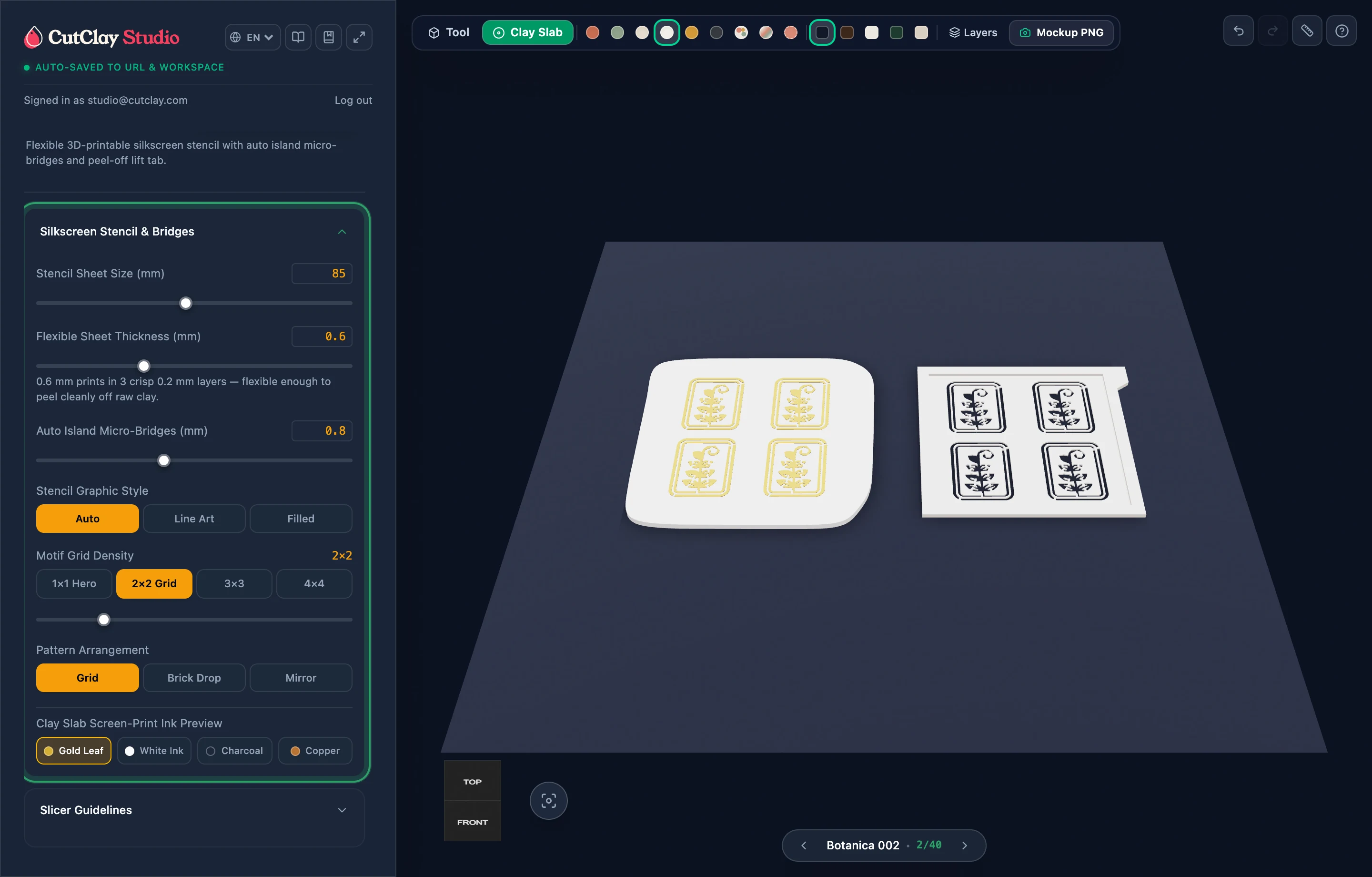
Silkscreen & Paint Stencils
Print flexible 3-layer paint, mica, and screen-print stencils right on your FDM printer—with automatic floating island bridges so flower centers and letter insides never fall out.
 Guide 03
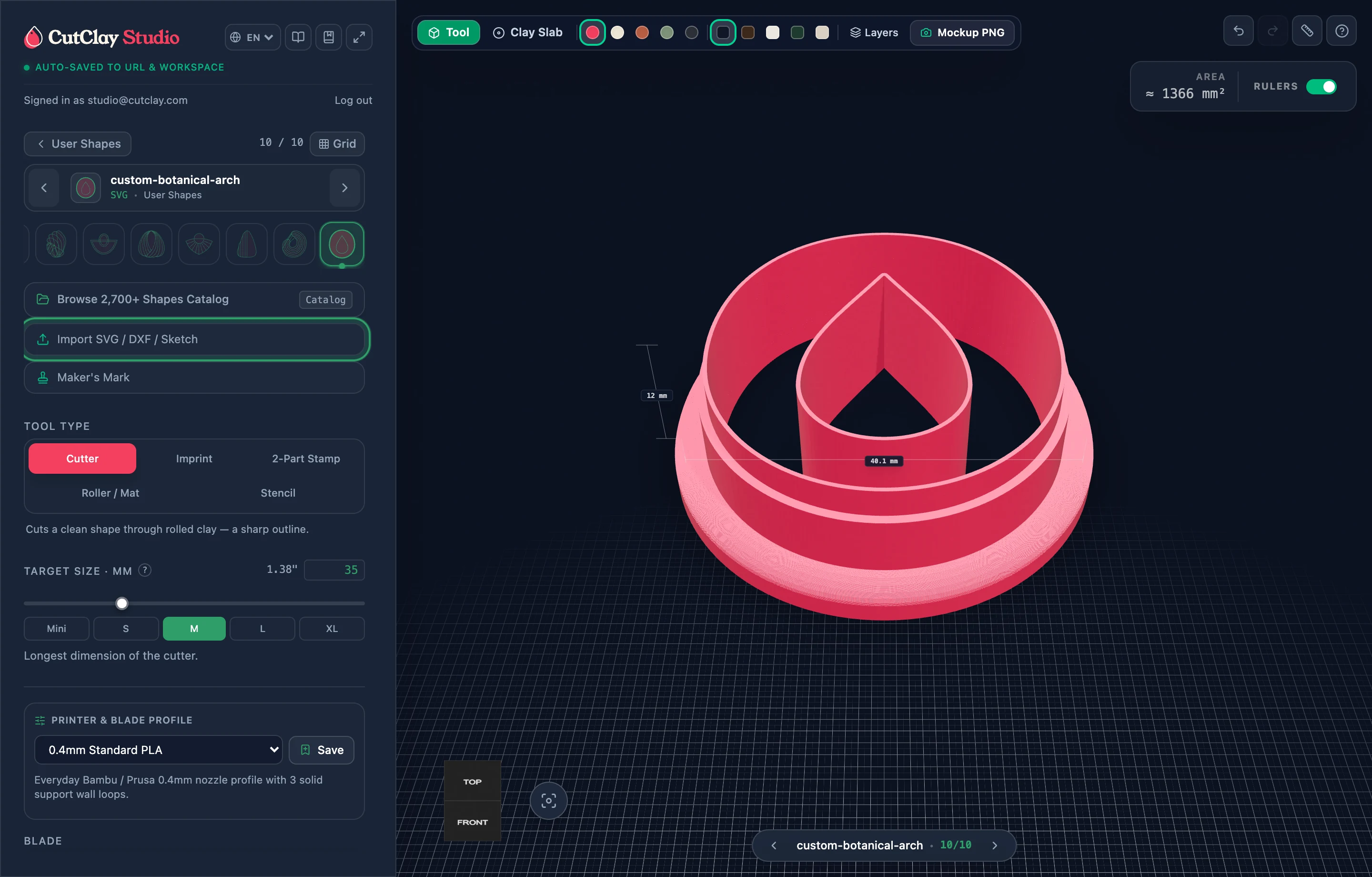
Import SVG, DXF & Sketches
Drag and drop vector files or raster drawings directly onto the Studio sidebar or viewport, understand how outer contours vs interior details are classified, and prepare ultra-clean artwork.
 Guide 16
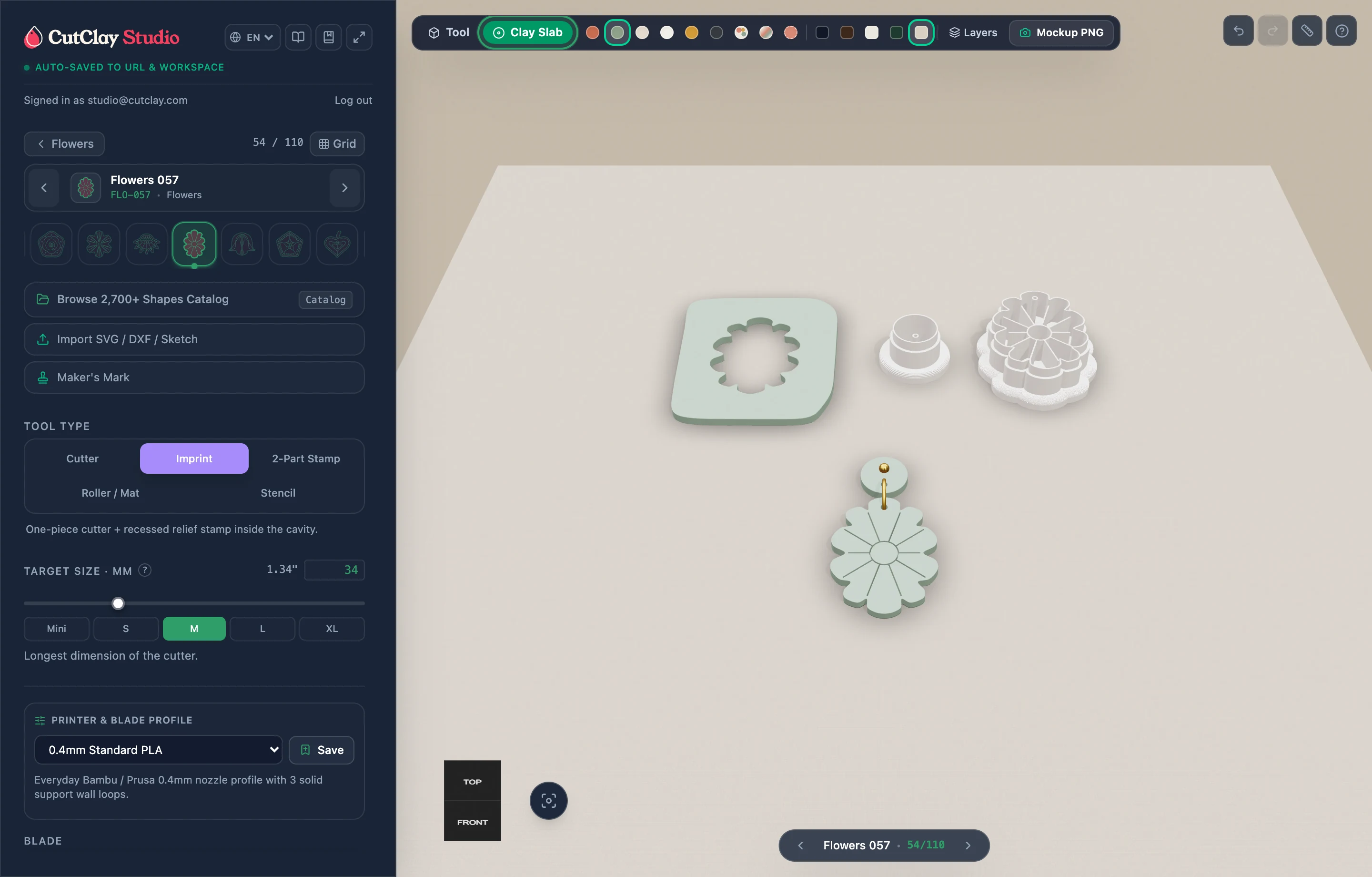
Clay Slab Mockups & PNG Export
Turn your CAD session directly into studio product staging: drag and rotate loose clay pieces across textured work surfaces, recolor swatches, and download 2400px PNG mockups.
Print washable custom clay stencils on demand
Test your pattern in real-time gold mica preview and download your first stencil STL free.
Open 3D Stencil Studio Free →